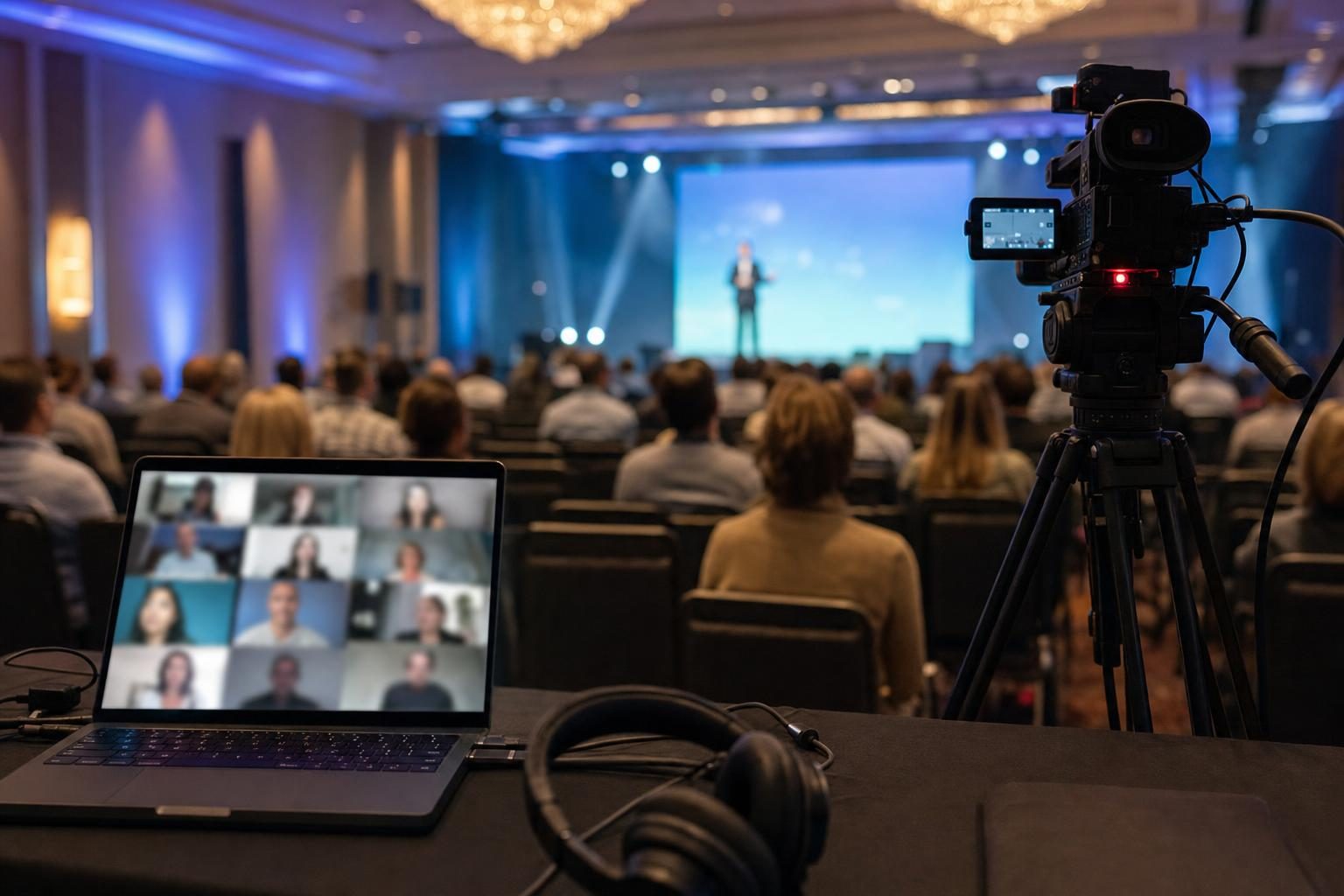
Hybrid is not a buzzword anymore, it is the default for most association conventions in Nashville. You have 800 people in the ballroom at Omni Nashville and another 300 watching from their laptops. The challenge is making both rooms feel like they are part of the same meeting. It is easier than you think if you stop treating the remote feed as an afterthought.
Start with a platform your AV provider knows
If you use Zoom, Teams, or a custom event platform, tell your AV partner weeks ahead. We can embed the stream, route the camera, and manage the audio so you are not juggling laptops on stage. At Gaylord Opryland, we often run a full production switcher that sends one clean feed to the platform and one to the house screens. The remote audience sees exactly what the live audience sees: slides, presenter, and all.
Camera and audio: the two things that cannot fail
The remote audience will forgive a lower bitrate, but they will not forgive audio they cannot hear. Use a direct audio feed from the sound board into the streaming computer, not a shotgun microphone pointing at a speaker. The camera should be on a tripod or jib, not handheld from the back of the room. Frame the stage wide enough to include the screen but tight enough to see faces. I always lock the camera to the main presenter and use a second camera for questions from the floor.
A short checklist for hybrid success
- Confirm the streaming platform credentials and meeting ID 48 hours before
- Run a full rehearsal with a remote test viewer, not just the in-room AV
- Have a dedicated laptop for streaming that is not used for slides
- Use a wired ethernet connection whenever possible
- Have a backup audio feed and a spare camera battery
The remote audience should never feel like they are watching through a keyhole. Give them the same show.
What often gets overlooked
The biggest mistake I see is nobody is watching the stream during the live event. The in-room tech is focused on the house, and the stream goes down for ten minutes before anyone notices. Assign one person to monitor the remote platform, watch the chat, and relay questions to the moderator. That person can be from your team or part of our crew, but they cannot be the same person running the main session.
Hybrid meetings work when the remote audience is treated like a first-class audience. Do that, and your convention will feel bigger than the ballroom.