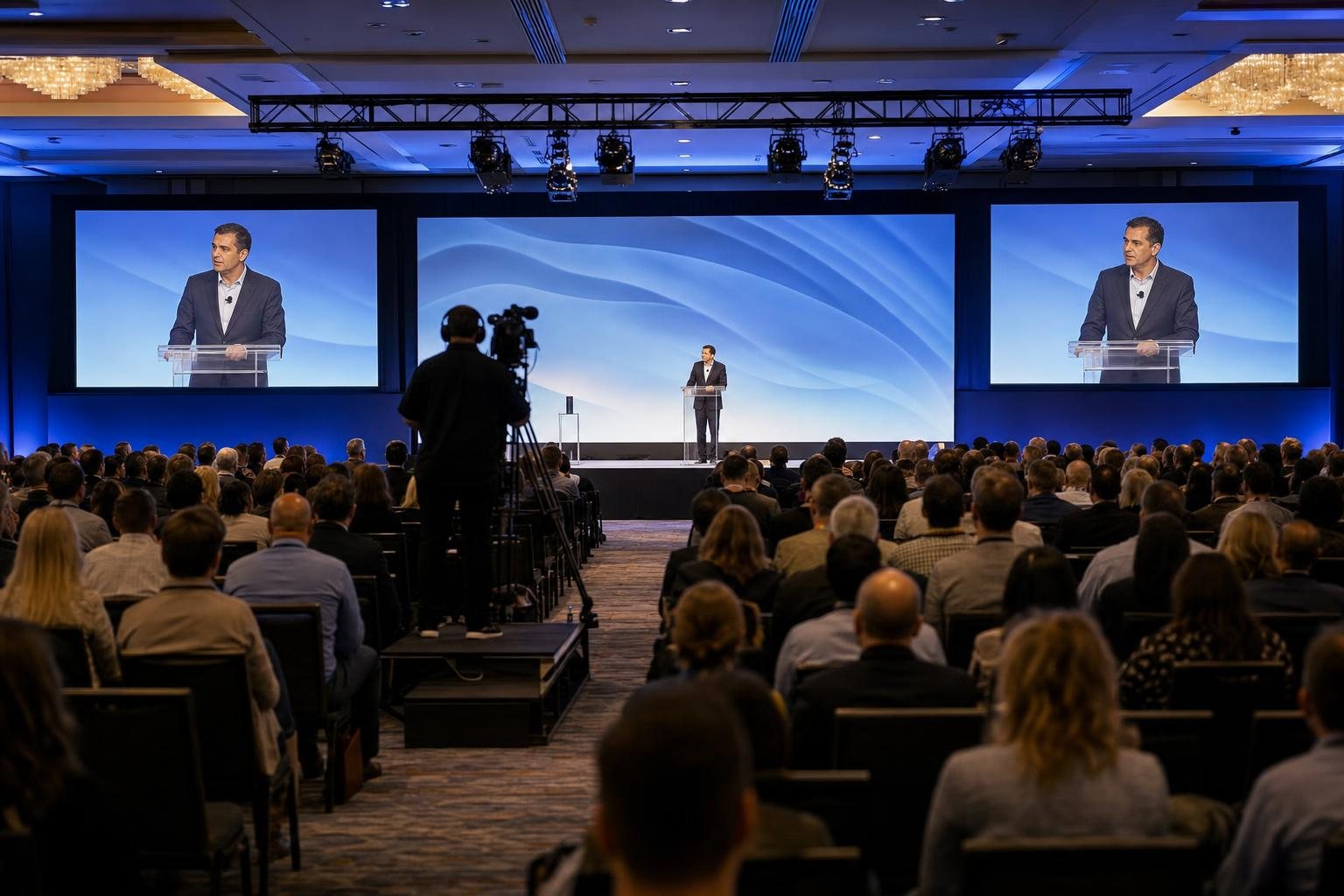
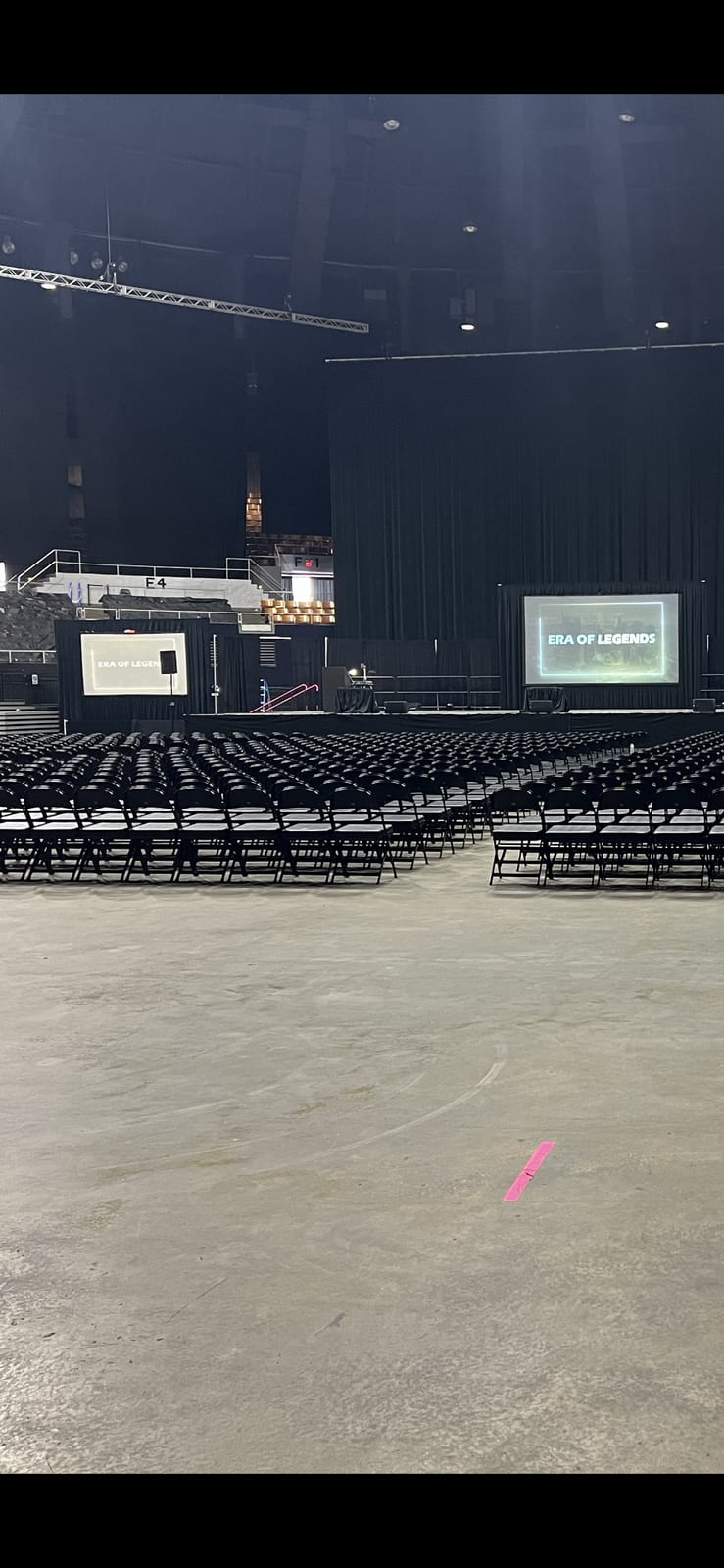
Cannery Ballroom is one of Nashville's better-known live music venues, sitting in the Cannery Row complex just south of downtown. The main room is a large open floor with a raised stage at one end, a balcony wrapping the perimeter and enough square footage to seat several hundred people on the floor in rows. It is a room built for concerts, but it adapts well to private presentations and industry events when the right equipment comes in.
For this music industry event, the floor was set with rows of black folding chairs facing the stage end of the room. Two projection screens flanked the stage, displaying content for the full house. Our role was the floor-level display layer.
What we brought in
We set up four 85-inch monitors on floor stands, positioned to serve different sections of the seated audience. Each monitor ran its own media player, so no external laptop or signal chain was needed at the displays themselves. The screens were not networked together, each one a self-contained unit. That approach simplifies troubleshooting on the day and removes one category of potential failure from the setup.
Audio for the event was handled with a Martin Audio Kicklider system. The room has significant volume and hard surfaces, so having a system that can fill the space evenly matters for a seated presentation format.
We were on site at noon for delivery and setup, with pickup running late in the evening after the event wrapped.
Planning notes for this room
Cannery Ballroom's load-in details and power access at floor positions are worth confirming early with the venue. The room can support a large-format event, but coordinating power drops to floor stand locations requires advance communication. If you are running media players at each display rather than a central source, confirm your content is preloaded and tested before doors open. With a room this size, you will not have easy access to every screen once the audience is seated.