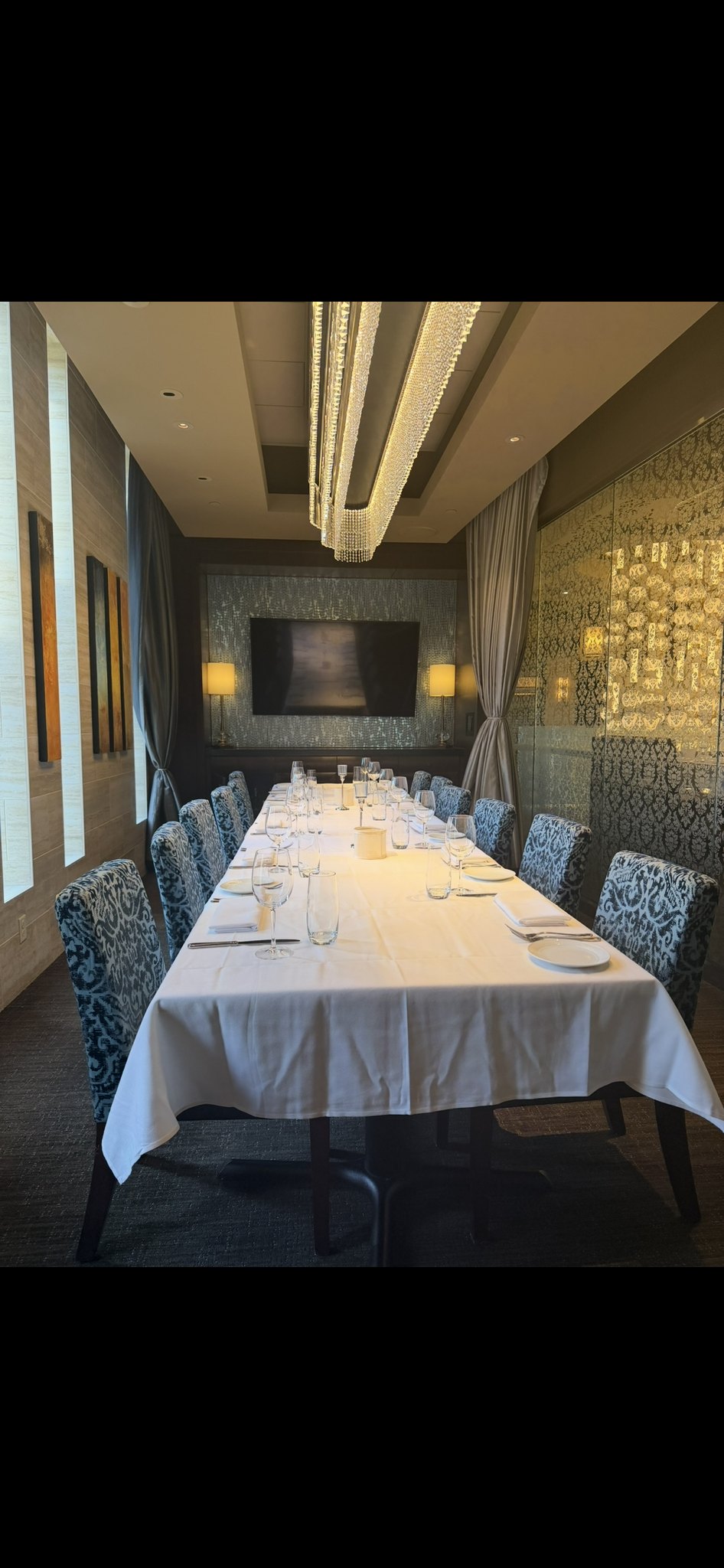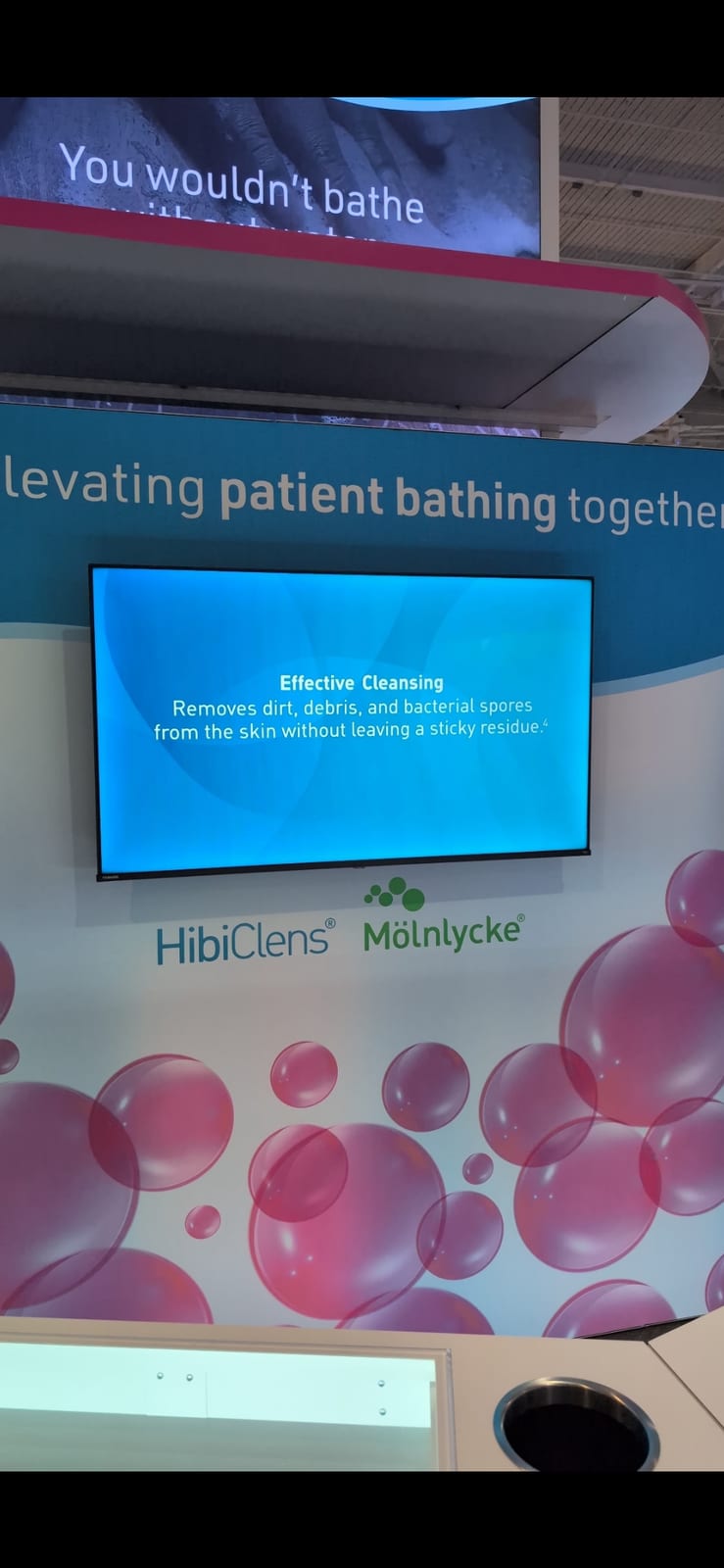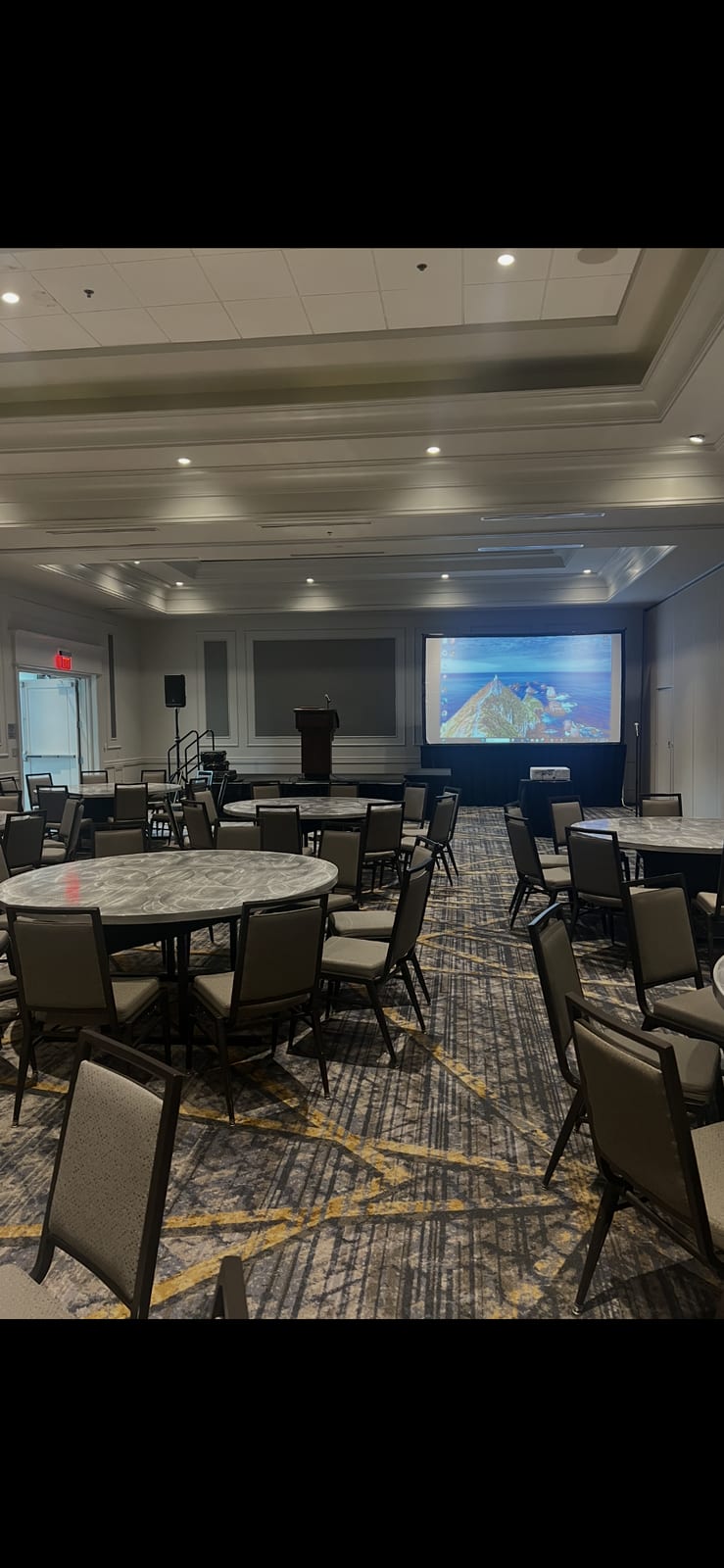
The Setup at Omni Nashville Hotel
Omni Nashville Hotel hosts trade shows and conferences in event space that sits on the more polished end of the convention spectrum. Booths here tend to be compact and well-defined, which means AV integration is visible from every angle and sloppy cable runs or afterthought monitor placement read clearly to passersby.
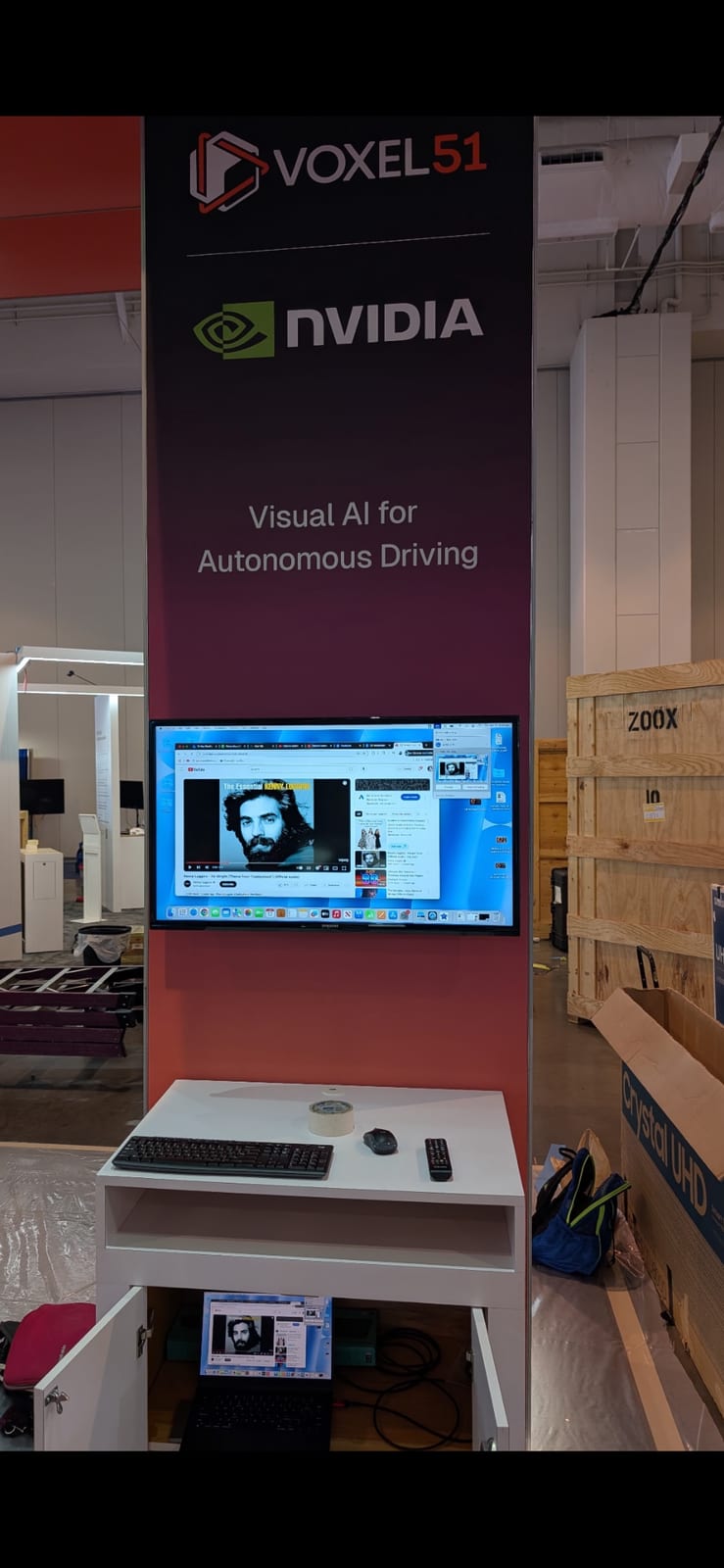
For this technology exhibitor, the booth was built around a tall column structure finished in deep red with the exhibitor's branding printed across multiple panels. We mounted a large flat-panel display directly into the face of that column, centered within the branded surround. The screen sat flush with the column face so the display read as part of the architecture rather than something clamped on after setup.
Below the wall-mounted display, the exhibitor ran a podium-style workstation: a keyboard, mouse, and remote on the desk surface, with a laptop open on the lower shelf. That secondary screen gave booth staff a working interface while the large display above handled audience-facing content. A second smaller display was visible at floor level on the lower shelf, likely mirroring the laptop for reference during demos.
Column Booths and Display Planning
Column-based booth structures create a natural mounting point for large displays, but they require more planning than a flat backdrop wall. The column face is narrower, which limits horizontal display width, and the height of the structure often puts the screen above comfortable eye level if placement is not thought through early.
For this booth, the display landed at a height that worked for a standing audience approaching the booth, with the branding above providing context from across the floor. The podium below kept the interactive layer separate from the presentation layer, which is a practical division when booth staff are running live demos alongside looping content.
If your booth uses a column or tower format, confirm the column face dimensions and the finished surface material before selecting display size. Mounting hardware and cable routing through a column core are both easier to plan before fabrication than after.